
The Land That Rewires You: A First-Timer's Complete Guide to Travelling Peru
Peru is not a destination. It is an experience that happens to you — slowly, overwhelmingly, and permanently. From the moment you land in Lima and smell the salt of the Pacific mixing with the smoke of street food vendors, something shifts. By the time you leave, weeks later, dusty from the Inca Trail and still slightly breathless from Cusco's altitude, you will be a measurably different person than the one who packed that suitcase.
This is your complete guide to travelling Peru for the first time — what to see, what to expect, and how to do it without the mistakes most first-timers make.
Why Peru Belongs on Every Serious Traveler's List
There are countries you visit and countries that visit you. Peru firmly belongs in the second category. It holds within its borders one of the greatest ancient civilisations ever to exist, an Amazon basin so vast and biodiverse it still contains species science hasn't named, a coastline stretching over 2,400 kilometres, and a cuisine so sophisticated it has produced restaurants that rank among the finest in the world.
It also has the kind of landscapes that make you forget, briefly, that the rest of the world exists at all.
Lima: Don't Rush Through It

Most travellers treat Lima as a transit stop. They land, sleep one night, and immediately fly to Cusco. This is a genuine mistake. Lima is one of South America's most vibrant, complex, and delicious cities, and it deserves at least two to three days of your full attention.
Start in Miraflores, the upscale coastal district where paragliders drift above the cliffs and the Pacific spreads out grey and wild below. Walk along the Malecón, eat a bowl of ceviche so fresh it tastes like the ocean distilled into a single dish, and spend an evening in Barranco — Lima's bohemian neighbourhood of crumbling colonial buildings, art galleries, and bars where musicians play late into the warm night.
The food scene alone justifies the stop. Lima is home to some of the most innovative and celebrated cooking in the world. Restaurants like Central and Maido have repeatedly featured on global best restaurant lists, but the real magic happens in smaller, neighbourhood spots where recipes have been passed down through generations and a plate of lomo saltado costs less than a cup of coffee back home.
Cusco: Acclimatise Before You Do Anything Else

Cusco sits at 3,400 metres above sea level and it will let you know this immediately. Altitude sickness — locally known as soroche — affects the majority of visitors and ranges from mild headaches and breathlessness to genuine nausea and disorientation. The cure is simple but requires patience: slow down, drink enormous quantities of water, avoid alcohol for the first 48 hours, and let your body adjust.
Coca tea, available everywhere in Cusco, genuinely helps. Embrace it.

Once you've acclimatised, Cusco reveals itself as one of the most extraordinary cities in the Americas. The historic centre is a living layer cake of civilisations — Inca stone foundations supporting Spanish colonial buildings, ancient ceremonial sites converted into churches, narrow cobblestone streets that wind uphill past doorways carved centuries before Europe had any idea this continent existed.
The Plaza de Armas is the city's beating heart. Sit at a café on its edge with a coffee and watch the city move — schoolchildren in uniform, women in traditional dress carrying bundles on their backs, tourists squinting at maps, and above it all, the ornate façades of the Cathedral and the Church of La Compañía glowing golden in the afternoon light.
Machu Picchu: The Reality Lives Up to the Myth
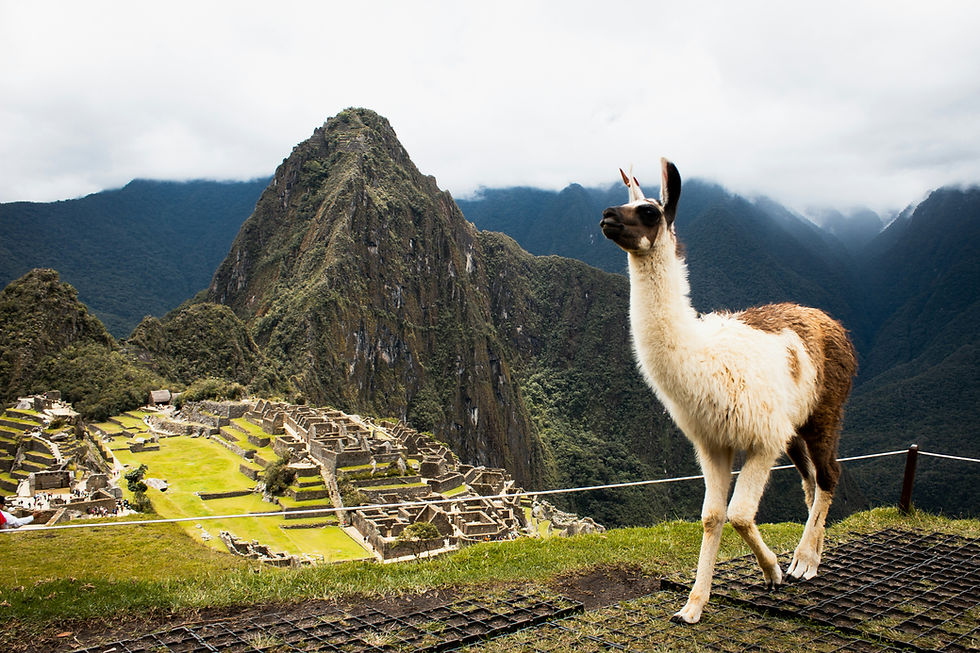
There is always the fear, with iconic places, that the reality will disappoint. That the crowds, the commercialisation, the Instagram-famous viewpoints will strip away whatever made it sacred. Machu Picchu does not disappoint. It cannot. There is something about standing before those stone terraces, wrapped in morning cloud, the Urubamba River far below and the Andes rising in every direction, that bypasses cynicism entirely.
Go early. The first buses from Aguas Calientes depart around 5:30 AM and the site opens at 6:00 AM. Those first hours, before the midday crowds arrive, are genuinely magical. The mist moves through the ruins. Llamas graze between ancient walls. The scale of the place — and the audacity of building it — slowly becomes comprehensible.
Book your entry tickets well in advance. Peru now operates a strict timed-entry system with limited daily visitor numbers, and tickets sell out weeks ahead during peak season.
The Sacred Valley: Slow Down Here

Between Cusco and Machu Picchu lies the Sacred Valley of the Incas, and many travellers rush through it as a corridor rather than a destination in itself. This is a mistake. The Valley contains some of the most atmospheric Inca ruins in the country — Pisac, Ollantaytambo, Moray, the salt pans of Maras — set against agricultural landscapes that look almost unchanged from how they appeared five centuries ago.
Stay a night or two in Ollantaytambo, a living Inca town where the original grid of streets and water channels still functions exactly as the Incas designed them. Eat dinner watching the massive temple fortress above the town turn gold, then pink, then dark as the Andean night falls fast and cold and brilliant with stars.
The Amazon: The Wildest Place You Will Ever Stand

Peru contains a significant portion of the Amazon rainforest, and visiting it — even for just a few days — is an experience that recalibrates your understanding of scale and life. Puerto Maldonado in the southeast is the most accessible gateway, with a well-developed network of jungle lodges ranging from basic to genuinely luxurious.
What you will see depends enormously on where you go and how long you stay. Macaws, caimans, giant river otters, monkeys, pink river dolphins, and more species of bird than exist in the entirety of Europe — all within reach if you're in the right place with a knowledgeable guide. Night walks reveal an entirely different jungle, noisy and alive in ways that are simultaneously thrilling and deeply humbling.
Practical Essentials for First-Time Peru Travellers
When to go: May to October is the dry season and ideal for trekking and Machu Picchu visits. November to April brings the wet season — lush, green, fewer crowds, and significantly lower prices, though some trails close.
Currency: The Peruvian Sol (PEN). US dollars are widely accepted in tourist areas but soles are better for local markets and smaller establishments. ATMs are available in all major cities.
Getting around: Domestic flights connect Lima to Cusco, Arequipa, and Puerto Maldonado efficiently. Buses range from comfortable overnight coaches to basic local services. The train to Aguas Calientes (for Machu Picchu) must be booked in advance.
Health: Altitude sickness is the primary concern in the highlands. Yellow fever vaccination is recommended for Amazon travel. Drink only bottled or purified water throughout the country.
Safety: Peru is generally safe for tourists in the main destinations. Standard urban caution applies in Lima and Cusco — be aware of your surroundings, don't display expensive equipment unnecessarily, and use registered taxis or app-based services rather than flagging random cabs.
The Part Nobody Warns You About
Nobody warns you that Peru will follow you home. That you'll find yourself, months later, looking at photographs of the light over the Sacred Valley and feeling a specific kind of longing that has no satisfying name. That you'll recommend it aggressively to everyone you know and be slightly annoyed when they don't go immediately.
Peru is that kind of place. Go once, and the conversation about going back starts before you've even unpacked.


